Is 72% chocolate strong?
We have learned to judge a chocolate bar by the number on the wrapper.
70% sounds like “proper dark chocolate.”
80% sounds serious.
100% sounds almost intimidating.
But cocoa percentage tells you less about flavor than most people assume.
In general, it represents the combined proportion of cacao-derived ingredients in the recipe — such as cocoa mass and cocoa butter. It does not tell you where the cacao came from, how it was fermented, how it was roasted or exactly how the cacao components are balanced.
Why two 72% bars can taste completely different
Think about two cups of black coffee.
Both contain coffee and water.
One can taste aggressively bitter.
The other can remind you of berries, flowers or caramel.
Cacao works in much the same way.
Genetics, origin, fermentation and drying shape the raw material. Then the chocolate maker decides how to roast it, how much cocoa butter to use, how to refine it and how to build the recipe around it.
That is why our 72% can feel less sharply bitter while tasting more intensely of cacao than another bar carrying the same percentage.
.png)
So what is the percentage actually useful for?
As a guide.
Within one maker's collection, it can be a very practical way to estimate intensity.
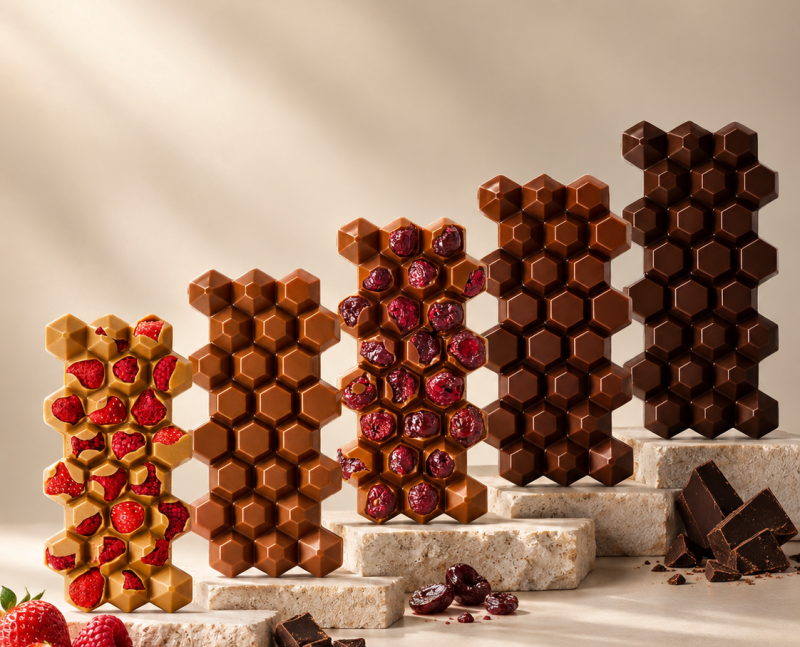
That is one reason YANDMI does not rely heavily on the traditional white / milk / dark classification.
Our range makes more sense as a spectrum from 26% to 100%.
26% — the creamiest profile
26% Unusual — this is the softest and most buttery expression in the collection.
Cocoa butter provides the cacao component, while cashews, coconut and real vanilla build the creamy character.
Many people compare the flavor to custard.
40–45% — our idea of “milk chocolate without milk”
Here the cacao becomes more noticeable, while cashew keeps the chocolate soft and creamy.
40% is gentler.
45% moves further toward cacao intensity.
No milk powder required.
72% — the middle ground
72% Core — this is often where we suggest beginning if you want to explore more cacao-forward bean-to-bar chocolate.
It is clearly intense, but good aromatic cacao does not automatically equal aggressive bitterness.
Depending on the beans, you may discover fruit, caramel, wood, nuts or other naturally occurring notes.
80% — cacao moves to the foreground
80% Nocturne — with less sweetness competing for attention, the beans become more obvious.
Instead of chewing it quickly, let the chocolate melt.
The first impression is intensity.
Then individual flavors and the finish begin to appear.
100% — cacao without added sweetness
100% Absolute Cacao — this is the most concentrated end of the spectrum.
Bitterness and astringency may arrive first, but the longer you taste, the more the individual cacao begins to show itself.
You do not need an entire bar at once.
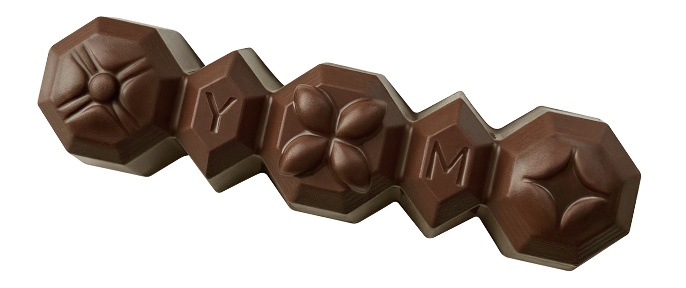
A few YANDMI hexagons can be enough.
.png)
Does a higher percentage mean better chocolate?
No.
A 100% bar can start with badly fermented beans.
A 45% bar can be built around exceptional cacao and an incredibly precise recipe.
Percentage measures quantity. It does not measure quality.
So next time, do not stop at the number.
Look for origin.
Look at the ingredient list.
Find out who actually made the chocolate.
Then taste it.
Because even the most precise percentage cannot tell you what a bar will actually feel like on your tongue.
We explore this journey in our stories about selecting cocoa in Venezuela and bean-to-bar versus mass-market chocolate.
How to choose your percentage
There is no universally correct number. Decide what you want today: delicacy, balance, or maximum cocoa intensity. If you are discovering darker profiles, 72% is often a comfortable starting point before moving toward 80% and 100%. If you prefer softer textures, begin with 26% or 45%.
You can compare the range in the Gallery of Flavours. Percentage is a useful clue, but the most important information is always in the bar itself: origin, recipe, texture, and taste.