You can order cacao online. So why go to Venezuela?
Buying cacao beans is not difficult.
Find a supplier. Read a specification. Order the bags. Wait for delivery.
But that is not enough if your goal is to make chocolate that expresses the character of a particular cacao.
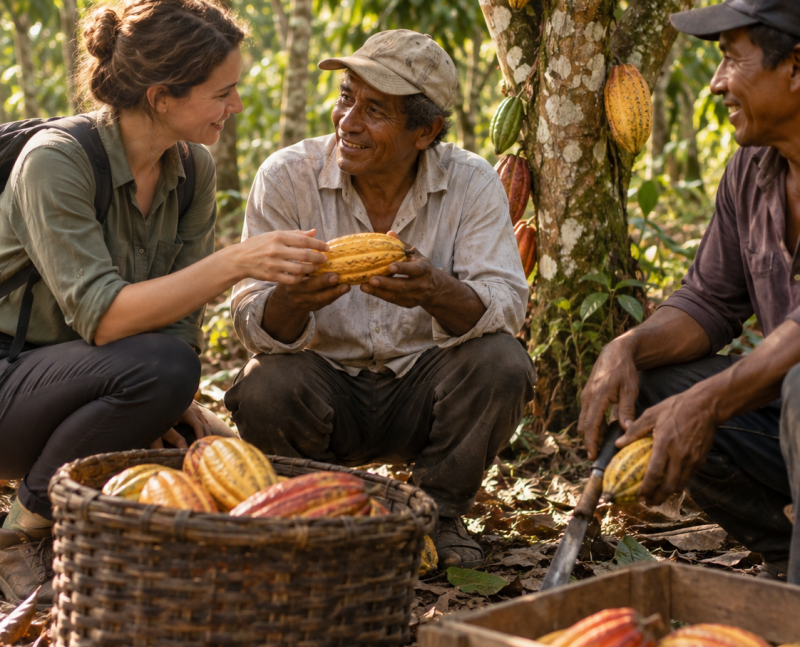
That is why our partner Andrii works with producers directly in Venezuela, visits cacao operations and evaluates individual lots.
A famous origin can be written on the bag.
The beans inside can still be poor.
Fine flavor cacao is not simply a “rare variety”
The global cacao trade often distinguishes between bulk or ordinary cocoa and fine flavour cacao.
But fine flavor is not one magical variety and it is not a quality certificate automatically granted by geography.
The International Cocoa Organization defines fine flavour through a complex sensory profile shaped by genetics, terroir, growing conditions, farm management and post-harvest practices.
ICCO currently estimates fine flavour cocoa at roughly 12% of global cacao bean exports. Venezuela is listed among origins where fine flavour exports are present, although ICCO does not currently assign the country a specific percentage.
That distinction matters to us.
Because an extraordinary origin cannot rescue a badly handled lot.
Chocolate flavor starts during fermentation
Fresh cacao does not taste like a finished chocolate bar.
One of the most important transformations happens immediately after harvest: fermentation.
Microorganisms act on the pulp surrounding the beans and trigger biochemical changes inside them. These changes create flavor precursors that become increasingly recognizable later through drying and roasting.
Scientific reviews consistently identify genetics, environment, fermentation, drying and roasting as interconnected drivers of cocoa aroma and sensory quality.
Get one stage badly wrong and the potential of the bean can disappear.
.png)
The lot we rejected
One farm had cacao that initially looked promising.
Andrii did not approve the lot.
When beans were opened and inspected, some showed internal signs of mold linked to moisture and storage conditions.
This is exactly why a specification or country name cannot replace physical quality control. ICCO itself lists fermentation, drying, off-flavors, internal mold, infestation and impurities among the factors used when evaluating fine flavour cocoa.
“Venezuela” is not the quality guarantee.
The individual lot is what matters.
The third ingredient is trust
We want to know the people behind the cacao.
How they grow it.
How they harvest.
How fermentation is managed.
Where the beans are dried.
How the finished crop is stored.
But a direct relationship does not mean blindly accepting every harvest.
Each season is new.
Every lot still has to earn its way into our chocolate.
Then the cacao travels to Ukraine
Only then does our part of the transformation of bean-to-bar process begin.
A roasting approach needs to be developed around the actual beans.
They are cleaned and processed before the chocolate spends days refining under stone grinders.
Then come resting, tempering and molding.
Every decision can either reveal what genetics, terroir and fermentation created — or flatten it.
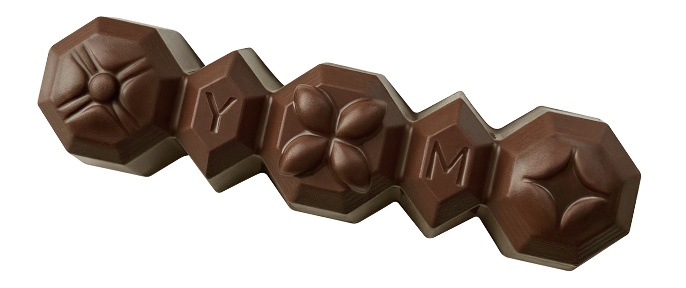
That is why the journey from cacao fruit to a finished YANDMI bar is measured in far more than hours.
Sometimes it takes months.
But when a chocolate with no added flavor suddenly reminds you of fruit, caramel, nuts, flowers or wood, you begin to understand why.
Chocolate does not start in our workshop.
It starts much earlier.
Origin speaks most clearly in pure profiles. Compare 72% Core, 80% Nocturne, and 100% Absolute Cacao in the Gallery of Flavours
.png)